
VOIP Clinia — Integrated Platform Telephony
Research and development of a native VOIP feature integrating voice calls into Clinia's platform, bringing patients and clinics closer together.
- Company
- Clinia
- Duration
- 6 months
- Tools
- Figma · Hotjar · Maze
- Role
- UX Designer responsible for research, flows and design of the feature
- Skills
- Interviews · User testing · User flow · Wireframing · Prototyping · User research · UX Design · Design System
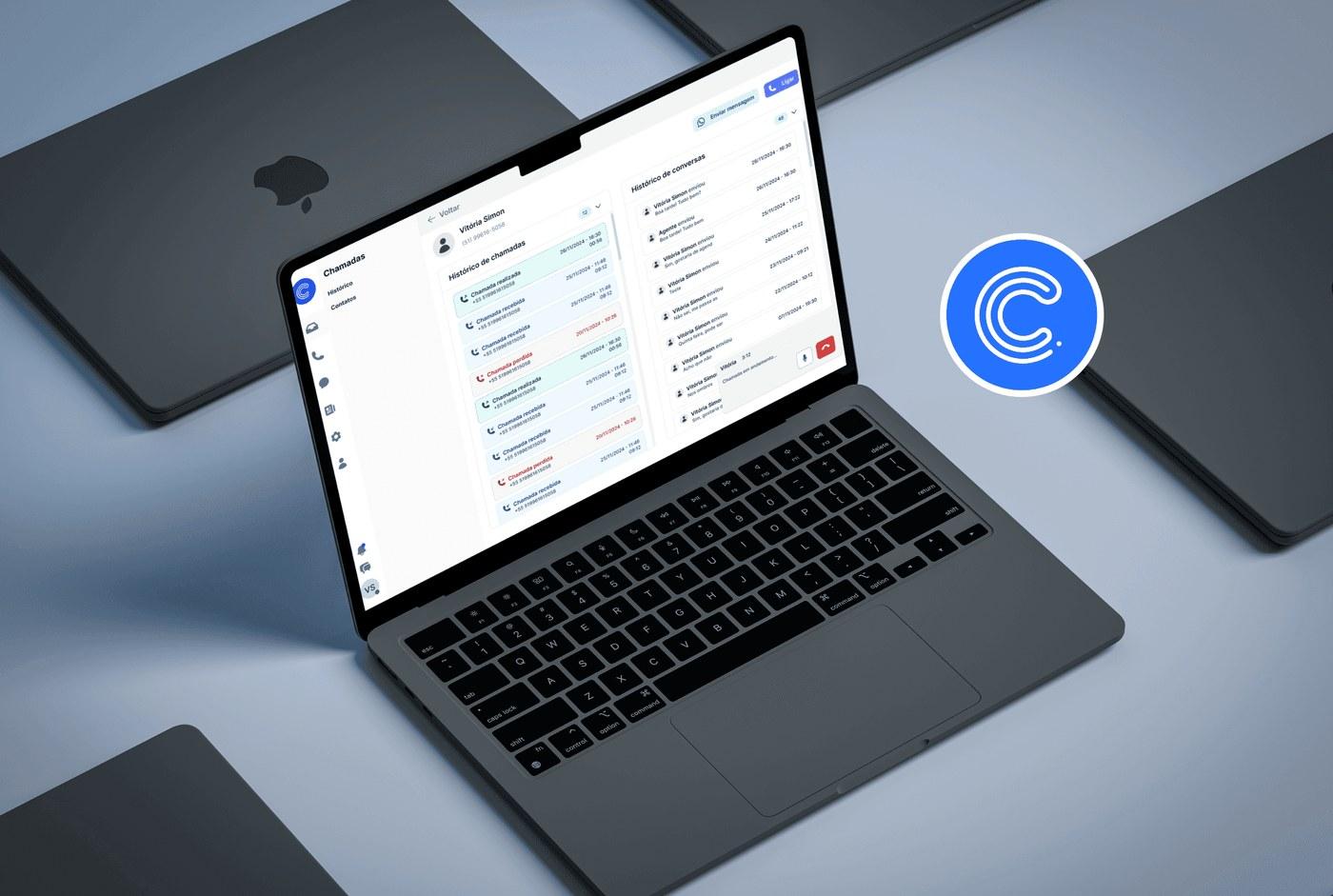
The problem
Today, platform users have to rely on external tools to communicate by voice, which fragments the experience and breaks continuity within the platform. The lack of a native VOIP solution prevented smooth integration with the platform's other features and often left out essentials like recording and transcription — gaps that shaped development around centralization, continuity, functionality and efficiency.
Results
A Hotjar survey (between 84 and 127 respondents, depending on the question) confirmed demand for the feature and helped prioritize what to build. In usability testing — synchronous via Google Meet and asynchronous via Maze — we validated that the screens delivered a fast experience with few errors.
97%
task success rate in usability testing
8.6s
average time to complete each task
57.7%
of users prioritize recording and scheduling integration
Process
Desk research & benchmark: analysis of VOIP best practices on the market, a review of studies on user needs, and technical exploration to confirm implementation feasibility.
Mapping flows: user journey and service blueprint, with 6 interviews conducted before any high-fidelity screen was built.
Strategic hypotheses: forming and validating hypotheses about manager access to call data, unifying data across platforms, and integrating with the patient-care flow.
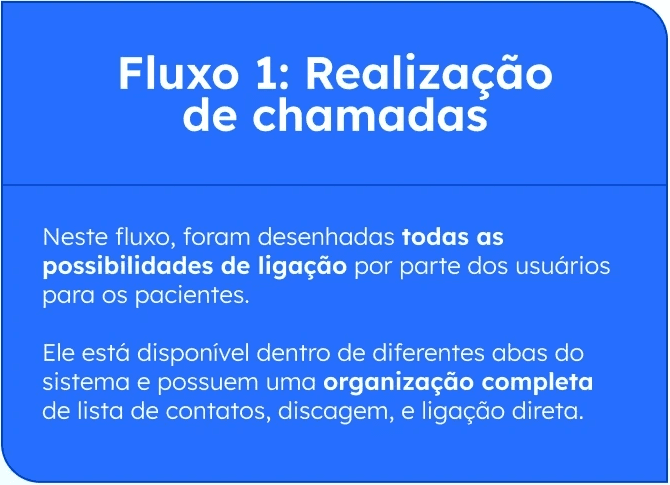
Flow 1 (making calls) and Flow 2 (receiving calls): designing every calling scenario for users, and incoming patient calls available from any tab on the platform.
Refine & deliver: handing off screens and prototypes to the development team, which implemented the solution with Twilio (telephony) and Redis (status and settings cache).
UX Research | User interviews
Before starting development of Clinia's VOIP high-fidelity interfaces, interviews were conducted with six users to understand their needs, pain points and expectations around communication between clinics and patients.
The interviews made it possible to explore how the platform was actually used and spot opportunities for improvement. Insights were organized into a research repository, making it easier to identify patterns, analyze needs and define project requirements. 6 users interviewed, grounding the build in the real needs of the people who use the platform.
UX Research | Quantitative survey with Hotjar
To complement the interviews, a quantitative survey was run using Hotjar, aimed at understanding users' interest in the VOIP feature and identifying which capabilities should be prioritized.
The survey looked into communication habits, daily call volume, and expectations around integrating telephony into the Clinia platform. The data collected helped guide feature prioritization and informed product decisions, while also surfacing commercial interest in the new solution.
34%
showed interest in the new feature
24%
made more than 100 calls a day
“Based on live conversations and the asynchronous Maze test, we could pinpoint exactly which parts of the product needed more usability attention — and fix them before delivery.”
Next steps
With the feature in handoff for production, next steps include a beta-client release, shadowing and recording analysis to understand real-world use, feedback collection through user interviews, and evolving toward VOIP 1.1 with even more capabilities.