
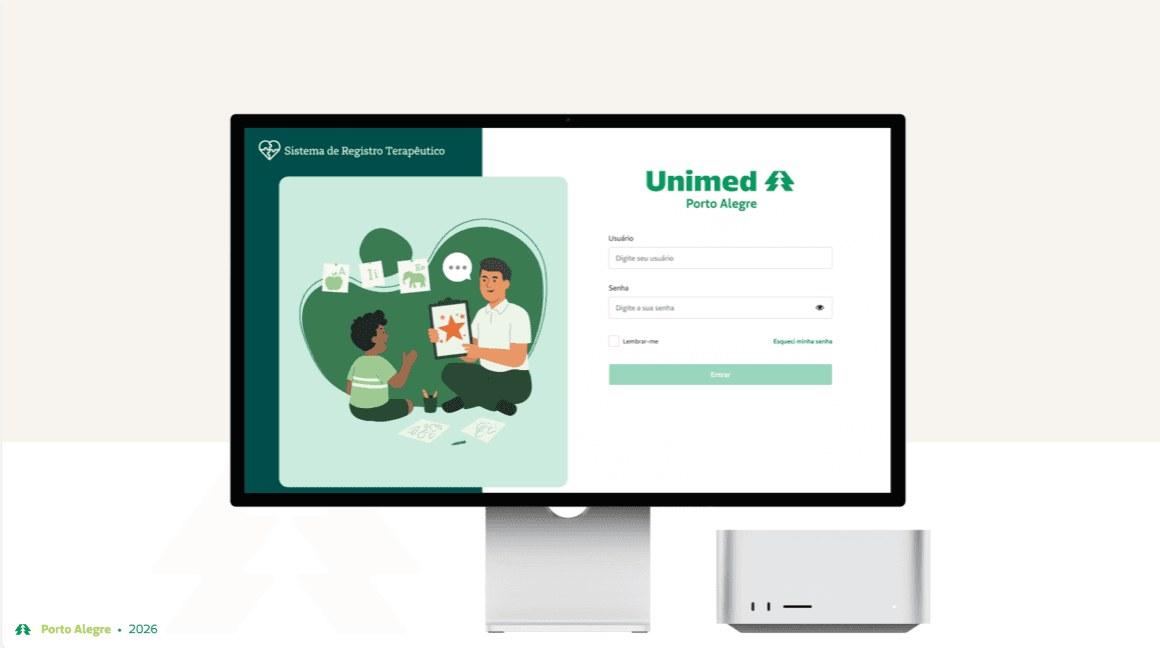
Therapeutic Record System (SRT)
A platform built to structure the recording of therapy sessions at partner clinics, bringing standardization, speed and traceability to both clinics and the cooperative.
- Company
- Unimed Porto Alegre
- Duration
- September 2025 – V1 shipped and in use (under my ownership since October 2025)
- Tools
- Figma · FigJam · Handoff to OutSystems and React
- Role
- Product Designer
- Skills
- User research · Prototyping · Flow design · Dev handoff · Training
Context
Before the SRT, therapy sessions at partner clinics were logged manually. I saw an opportunity to build a structured platform that would bring more standardization, speed and traceability to that process — for both the clinics and the cooperative.
Discovery process
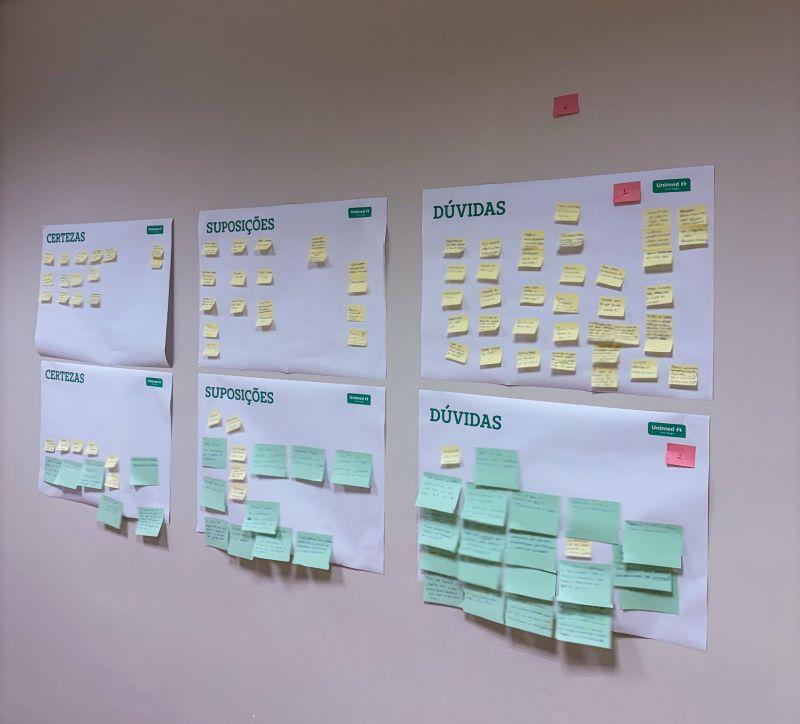
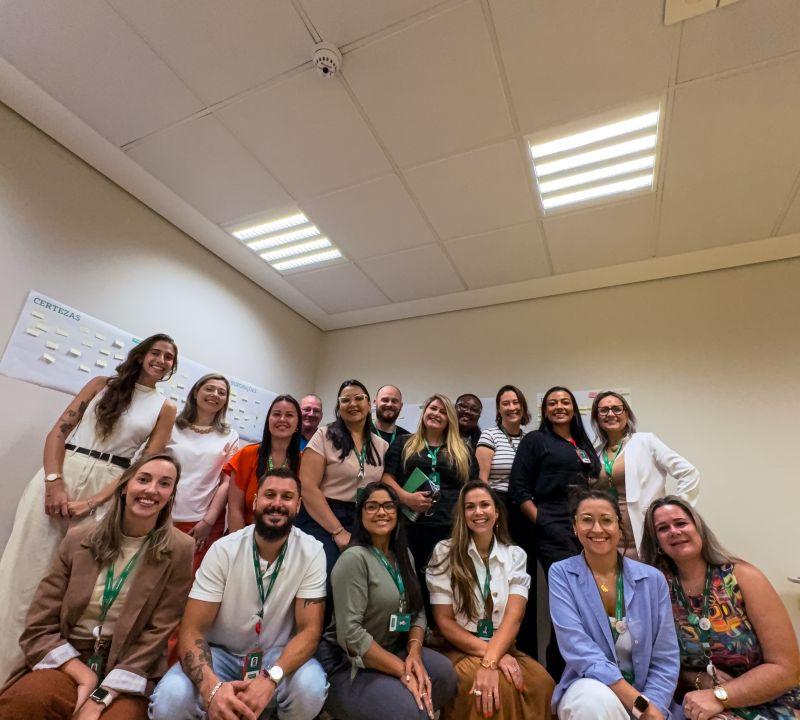
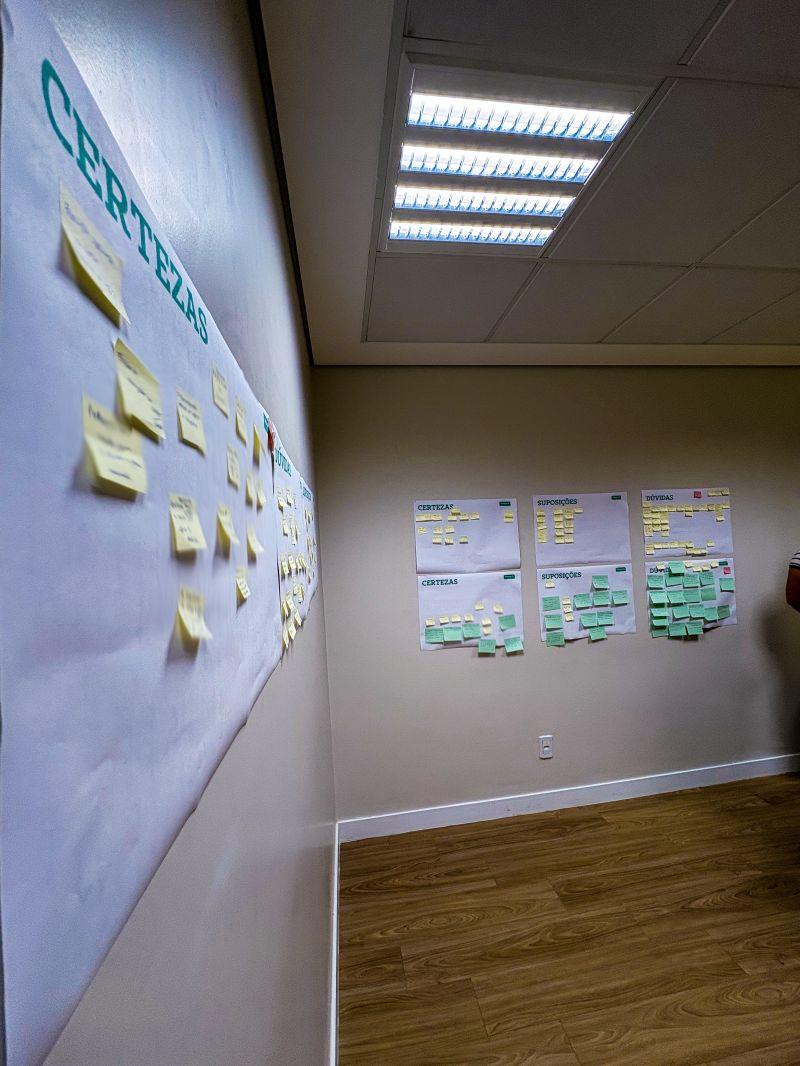
I ran a discovery process combining research organized in FigJam, desk research and market benchmarks, complemented by more than 25 internal interviews with professionals and clinic representatives. Findings were synthesized in a workshop using CSD matrices (Certainties, Suppositions, Doubts) to prioritize what to tackle first. From there, I designed the flows and prototypes in Figma, validated them with pilot clinics, and iterated through to V1.
100%
of the 28 pilot clinics trained in person
30x
SRT's planned scalability
30+
participants in the discovery workshop
The solution
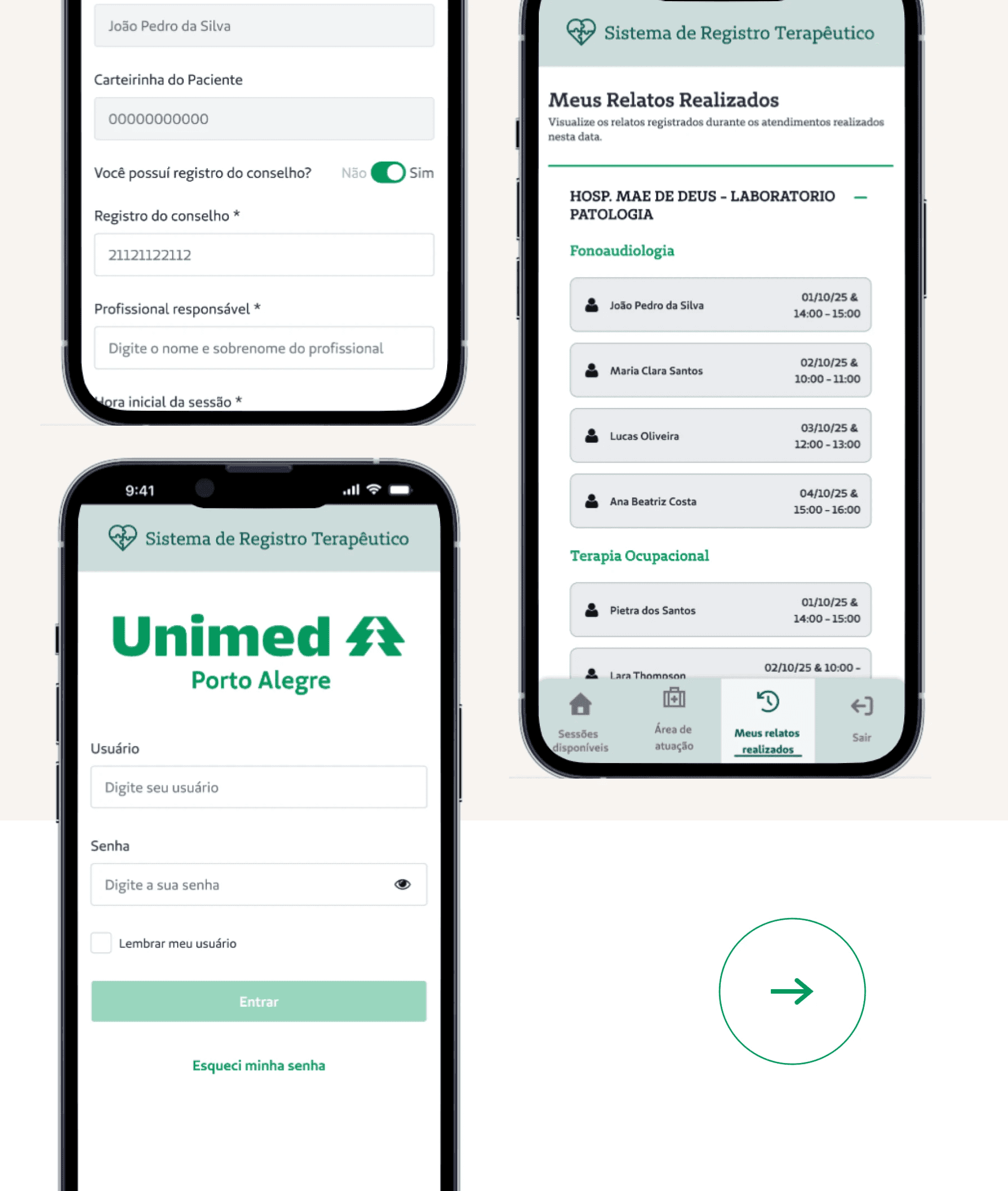
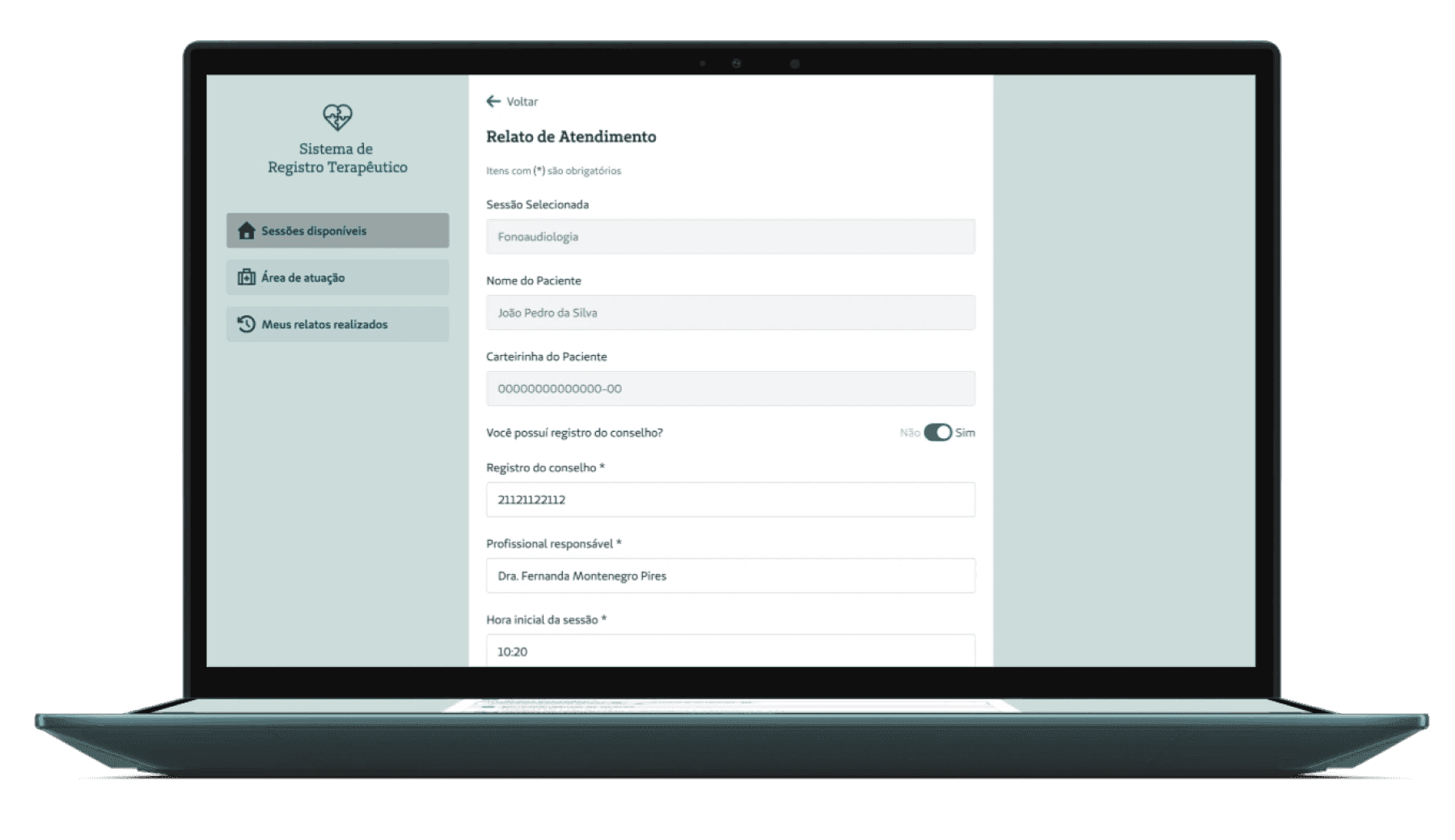
SRT guides the therapist through a full journey: login → first access (selecting their area of practice) → home screen, with sessions organized by clinic and specialty → session report → report history. For clinic administration, I also designed a therapist-registration flow built inside the Mais Unimed portal. One important business rule I had to make clear in the interface: reports must be filled in by 11:59pm the same day as the session, or risk a billing rejection (glosa). As an extension of SRT, I also designed an internal audit flow for the cooperative, with filters by clinic, professional, specialty and date, PDF/XLS report export, and automatic business-rule validation.
“Training the 28 clinics in person mattered just as much as designing the flows. We keep evolving the platform with that same care, always close to the people who use it.”
Conclusion
After launching V1, I personally trained all 28 pilot-network clinics on the platform — walking through the flows, answering questions, and collecting direct feedback from day-to-day users. This project showed me that design's role goes beyond the screen — it's only complete when the person using the product daily understands and trusts it. Today SRT's V1 is complete and actively used by clinics, with plenty of room ahead to keep evolving.